Mastering How to Clean Leather Boots: A UK Guide
June 19, 2026 15 min read 2,901 words
Unlock the secrets to pristine leather boots with our comprehensive, British-focused cleaning and maintenance guide.
Start Cleaning Now
Understanding Your Leather Boots: Types and Their Care
 Photo: NUDE Nahum / Pexels
Before you even think about how to clean leather boots, it's paramount to understand the specific type of leather your boots are made from. Not all leather is created equal, and applying the wrong cleaning method or product can cause irreversible damage, transforming your beloved footwear into a regrettable mess. In the UK, where diverse weather conditions challenge even the most robust materials, knowing your leather type is the first step towards effective maintenance.
Broadly, leather can be categorised into full-grain, top-grain, corrected-grain, and bonded leather, with various finishes like aniline, semi-aniline, nubuck, and suede. Full-grain leather, often found in high-quality boots, is the most durable and breathable, showing natural imperfections. It ages beautifully, developing a unique patina over time if cared for correctly. Top-grain leather is slightly sanded to remove imperfections, making it softer and more pliable, but also less durable than full-grain. Corrected-grain, or 'genuine' leather, has an artificial grain applied and is usually less expensive, often found in more fashion-oriented boots rather than those designed for heavy-duty wear. Bonded leather is made from scraps, ground up and bonded together with adhesive, making it the least durable and most challenging to clean effectively without damage.
Beyond these structural differences, finishes dictate much of the cleaning process. Aniline leather is dyed but retains its natural surface, making it incredibly soft but also highly susceptible to stains and water damage. Semi-aniline offers a thin protective coating, providing a balance between natural feel and stain resistance. Pigmented leather, with its thicker surface coating, is the most robust and easiest to clean, often seen in work boots or everyday wear. Suede and nubuck, though technically leather, have a napped finish that demands entirely different care, typically involving brushes and specialist sprays rather than wet cleaning.
For most common leather boots, especially those with a smooth, finished surface, a gentle approach is always best. Avoid harsh chemicals, abrasive scrubbing, or excessive water. The aim is to clean without stripping the leather of its natural oils or damaging its protective coating. Always test any cleaning product on an inconspicuous area first, such as the inside of the tongue or a hidden seam, to ensure it doesn't cause discolouration or damage. This crucial step can save you from a costly mistake. Understanding the composition and finish of your boots will directly inform your cleaning strategy, ensuring longevity and preserving their aesthetic appeal. For more insights on general footwear maintenance, consider exploring articles on
ultimate shoe care guides.
The Essential Toolkit for Immaculate Leather Boots
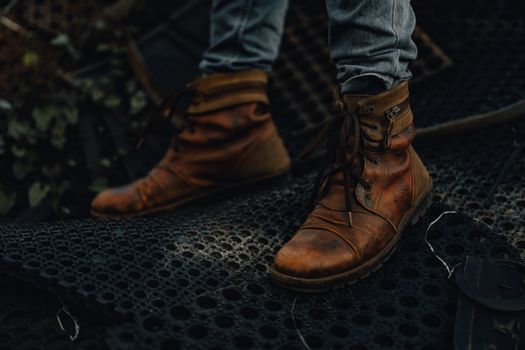 Photo: Nandu Vasudevan / Pexels
Equipping yourself with the right tools and products is non-negotiable when learning how to clean leather boots effectively. Just as a chef needs their specific knives, a boot enthusiast requires a dedicated cleaning kit. Skimping on quality here can lead to suboptimal results or, worse, damage to your expensive footwear. Your essential toolkit should include items for initial dirt removal, thorough cleaning, conditioning, and protection.
First, a good quality horsehair brush is indispensable. Its soft bristles are effective at dislodging loose dirt, dust, and dried mud from the boot's surface and seams without scratching the leather. For more stubborn grime, especially in the sole crevices, a stiffer nylon brush or an old toothbrush can be incredibly useful. Always start with dry brushing before introducing any liquids.
Next, you'll need a dedicated leather cleaner. Avoid using household soaps or detergents, as these often contain harsh chemicals that can strip natural oils, dry out the leather, and lead to cracking. Look for pH-neutral leather cleaners, often available as foams, sprays, or liquids, specifically formulated for footwear. Brands like Saphir, Collonil, or Fiebings are highly regarded in the UK for their quality leather care products. Follow the product's instructions carefully, as concentration and application methods can vary.
For application, a few soft, clean cloths are essential. Microfiber cloths are excellent as they are non-abrasive and highly absorbent. Have separate cloths for cleaning, applying conditioner, and buffing. Cotton rags can also work, but ensure they are lint-free.
Once cleaned, conditioning is the next critical step. Leather, like skin, needs to be moisturized to remain supple and prevent cracking. A high-quality leather conditioner or cream, preferably one containing natural waxes or oils like lanolin or mink oil, will rehydrate the leather. Again, choose a product appropriate for your leather type. Some conditioners also offer light waterproofing properties.
Finally, for protection against the notoriously unpredictable British weather, a waterproofing spray or wax is crucial. For smooth leather, a wax-based polish or a silicone-free waterproofing spray creates a barrier against water and stains. For suede or nubuck, a specialist waterproofing spray designed for napped leathers is vital. This protective layer is your boots' first line of defence against rain, snow, and salt.
Optional but highly recommended items include shoe trees (cedar wood is best for absorbing moisture and maintaining shape), a polishing cloth, and a welt brush for cleaning the seam where the sole meets the upper. Having these tools readily available will transform the task of cleaning your leather boots from a chore into a satisfying ritual, ensuring they remain in pristine condition for years to come.
Step-by-Step Guide: How to Clean Leather Boots Like a Pro
 Photo: Tofunmi / Pexels
Now that you understand your leather type and have gathered your essential toolkit, it's time to dive into the practical steps of how to clean leather boots with professional precision. This detailed, step-by-step guide will walk you through the process, ensuring no detail is overlooked for a thorough and effective clean.
**Step 1: Preparation is Key.** Begin by removing your boot laces. This allows you to clean every part of the boot thoroughly and prevents the laces from getting soiled or damaged during the process. Next, take your horsehair brush and vigorously brush off any loose dirt, mud, or debris from the entire surface of the boots, including the soles and around the welt. For stubborn, dried mud, a slightly stiffer brush or an old toothbrush can be used on the soles and crevices. The goal here is to remove all superficial grime before applying any liquids, as rubbing wet dirt into the leather can cause scratches or stains.
**Step 2: Deep Cleaning the Leather.** Dampen one of your soft, clean cloths with a small amount of water. Apply a pea-sized amount of your chosen pH-neutral leather cleaner to the cloth, or directly to the boot if it's a spray/foam (following product instructions). Work in small sections, gently wiping the leather in a circular motion. Avoid saturating the leather with water or cleaner; a little goes a long way. As the cloth becomes dirty, rinse it or switch to a clean section/cloth to avoid spreading grime. Pay close attention to areas that accumulate dirt, such as the toe box and around the vamp. For very dirty boots, you might need to repeat this step. Once the entire boot has been cleaned, use a separate, slightly damp cloth to wipe off any excess cleaner residue. Allow the boots to air dry completely in a well-ventilated area, away from direct sunlight or heat sources, which can dry out and crack the leather. This drying period can take several hours, so be patient.
**Step 3: Conditioning for Longevity.** Once your boots are thoroughly dry, it's time to rehydrate the leather with a conditioner. Apply a small amount of leather conditioner to a clean, soft cloth. Gently rub the conditioner into the leather in small circular motions, ensuring even coverage. The leather should absorb the conditioner, becoming more supple and richer in colour. Don't over-apply; a thin, even coat is sufficient. Allow the conditioner to penetrate for at least 15-20 minutes, or as per the product's instructions. This step is vital for maintaining the leather's flexibility, preventing cracking, and restoring its natural oils. For optimal results, consider exploring more on
advanced leather care techniques.
**Step 4: Protection and Finishing Touches.** After conditioning, buff the boots gently with a clean, dry cloth or a polishing brush to remove any excess conditioner and bring out a subtle sheen. If your boots are smooth leather and you desire a high-gloss finish, this is where you would apply a shoe polish, working it in thin layers and buffing between coats. Finally, apply a waterproofing spray or wax. For sprays, hold the can about 6-8 inches away and apply an even coat over the entire boot surface. Allow it to dry completely, which might take a few hours, creating an invisible barrier against moisture and stains. For waxes, rub a thin layer evenly over the leather and buff. Re-lace your boots, and they are now clean, conditioned, protected, and ready to face whatever the British weather throws at them.
Common Mistakes and Expert Tips for Leather Boot Care
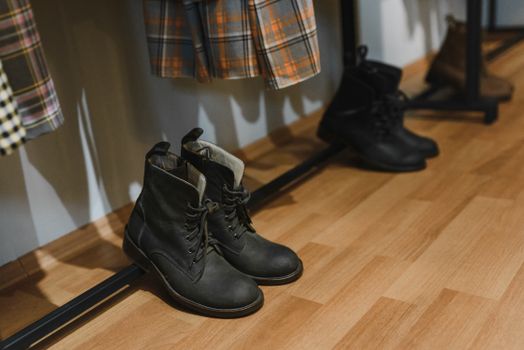 Photo: Arina Krasnikova / Pexels
Even with the best intentions, it's easy to make mistakes when cleaning leather boots that can compromise their appearance and lifespan. Avoiding these common pitfalls and adopting expert tips will ensure your boots remain a stylish and durable companion for years.
**Common Mistakes to Avoid:**
* **Using Household Cleaners:** Never use dish soap, laundry detergent, or general-purpose household cleaners. These products are often too harsh and contain chemicals that can strip the leather's natural oils, leading to dryness, discolouration, and cracking.
* **Over-Wetting the Leather:** Soaking leather or applying excessive water can cause it to swell, warp, and potentially lead to mould growth. Always use a damp, not soaking wet, cloth and wipe gently.
* **Drying with Direct Heat:** Placing wet boots near radiators, fireplaces, or in direct sunlight will dry the leather too quickly, causing it to shrink, stiffen, and crack. Always air dry at room temperature.
* **Ignoring the Interior:** While the exterior gets all the attention, the interior of your boots also needs care. Neglecting it can lead to odours and bacterial build-up.
* **Skipping Conditioning:** Cleaning without conditioning is like washing your hair without conditioner – it leaves the material dry and brittle. Conditioning is crucial for rehydrating and nourishing the leather.
* **Using the Wrong Products for Leather Type:** Applying smooth leather polish to suede or vice-versa is a common mistake. Always ensure your products match your specific leather type.
**Expert Tips for Superior Leather Boot Care:**
* **Regular, Gentle Cleaning:** Don't wait until your boots are caked in mud. A quick brush-down after each wear and a more thorough clean every few weeks (depending on usage) prevents dirt from embedding.
* **Stuff with Newspaper for Drying:** If your boots get soaked, stuff them with newspaper to absorb moisture from the inside. Replace the newspaper periodically until the boots are dry.
* **Invest in Cedar Shoe Trees:** These not only help maintain the boot's shape but also absorb moisture and odours from the inside, extending the life of your footwear significantly.
* **Rotate Your Boots:** Avoid wearing the same pair of leather boots every day. Giving them a day or two to rest allows them to air out and fully dry, which is essential for leather health.
* **Protect the Soles:** For boots with leather soles, consider having a cobbler add a thin rubber protective layer. This significantly extends the life of the sole, especially important in wet UK conditions.
* **Store Properly:** When not in use, store your boots in a cool, dry place, ideally in shoe bags to protect them from dust and scratches. Avoid storing them in plastic bags, which can trap moisture.
* **Don't Forget the Edges and Welts:** These areas are often overlooked but collect a lot of dirt. Use a smaller brush or an old toothbrush to clean these intricate parts.
* **Patch Test Always:** Regardless of how confident you are, always test any new product on an inconspicuous area first. This simple step can save you from ruining your boots.
By integrating these tips into your routine and consciously avoiding common mistakes, you'll master how to clean leather boots and ensure they remain a cherished part of your wardrobe for many seasons.
